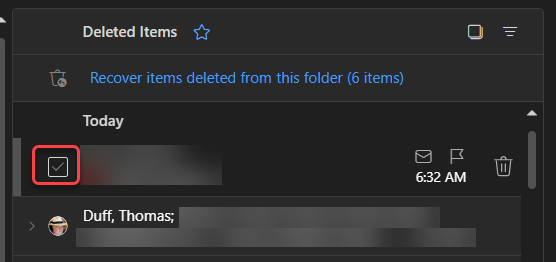
Email Reactions is a new feature (in Outlook on the Web) that allows you to quickly give feedback on an email without doing a reply or reply to all… think of it as similar to the “Like” feature on Facebook. Here’s how it works…
Format Data By Examples in Power Automate
OK… this is one of the coolest and most useful features I’ve seen lately. You can now use AI in Power Automate to help create expressions to format your data output. It’s the Format Data By Examples feature, and it’s a game-changer, In my opinion. Here’s how it works…
Microsoft 365 Pulse Roadmap webcast – Episode 146
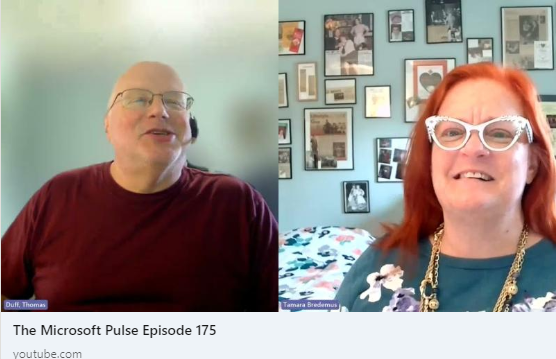
Episode 146 of the Microsoft 365 Pulse Roadmap webcast is now out on YouTube. Join Jennifer Mason, Tamara Bredemus, Adam Ochs, and myself as we cover this week’s updates.
Microsoft 365 Pulse Roadmap webcast – Episode 145
Episode 145 of the Microsoft 365 Pulse Roadmap webcast is now out on YouTube. Join Tamara Bredemus and myself as we cover this week’s updates.
The People web part now has a Medium setting
In your SharePoint Online pages, the People web part only had a small and large setting. This was, to borrow a theme from Goldilocks, either too cold or too hot. Now you have a Medium setting, which seems to be… just right. 🙂 Here’s how it works…
Microsoft 365 Pulse Roadmap webcast – Episode 144
Episode 144 of the Microsoft 365 Pulse Roadmap webcast is now out on YouTube. Join Tamara Bredemus, Adam Ochs, and myself as we cover this week’s updates.
Forms: Distribute your forms by using Teams as a new channel
Microsoft has a new feature for Forms that allows you to publish the form directly to a channel in Teams (instead of having to get a link and post it somewhere). Here’s what that looks like…
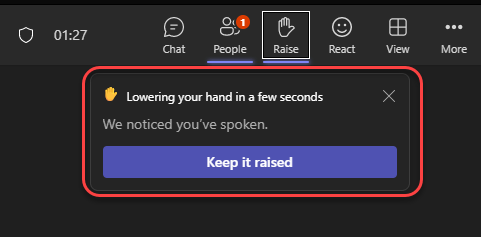
Microsoft Teams: Usability Improvements to In-Meeting Notifications
One of the things I’ve always found frustrating about Teams meetings is how all the various notifications show up all over the place. Chat messages in the lower-right corner, recording messages as a bar across the top, etc. Now with this set of changes, all the in-meeting notifications will be consistent and show up in a common area. Here’s what it looks like…
Using Page details for version history in SharePoint Online pages
Sandra “clicked a button” the other day, and noticed a cool feature in the Page details option at the top of a SharePoint Online page. You can examine the version history of the page, and see what web parts were edited or deleted. Here’s how that works…